
“The islands are ants, and the industrial nations are elephants.”
Kiribati, a scattering of fragile atolls on the vast skin of the Pacific, is the ant paying the price for the elephants’ feast. While the giants trample on, the sea they’ve unleashed rises to swallow the smallest first. Survival now demands innovation – floating cities, adaptive architecture, and ways of living that move with the water, not against it.

Urban Planning Concept
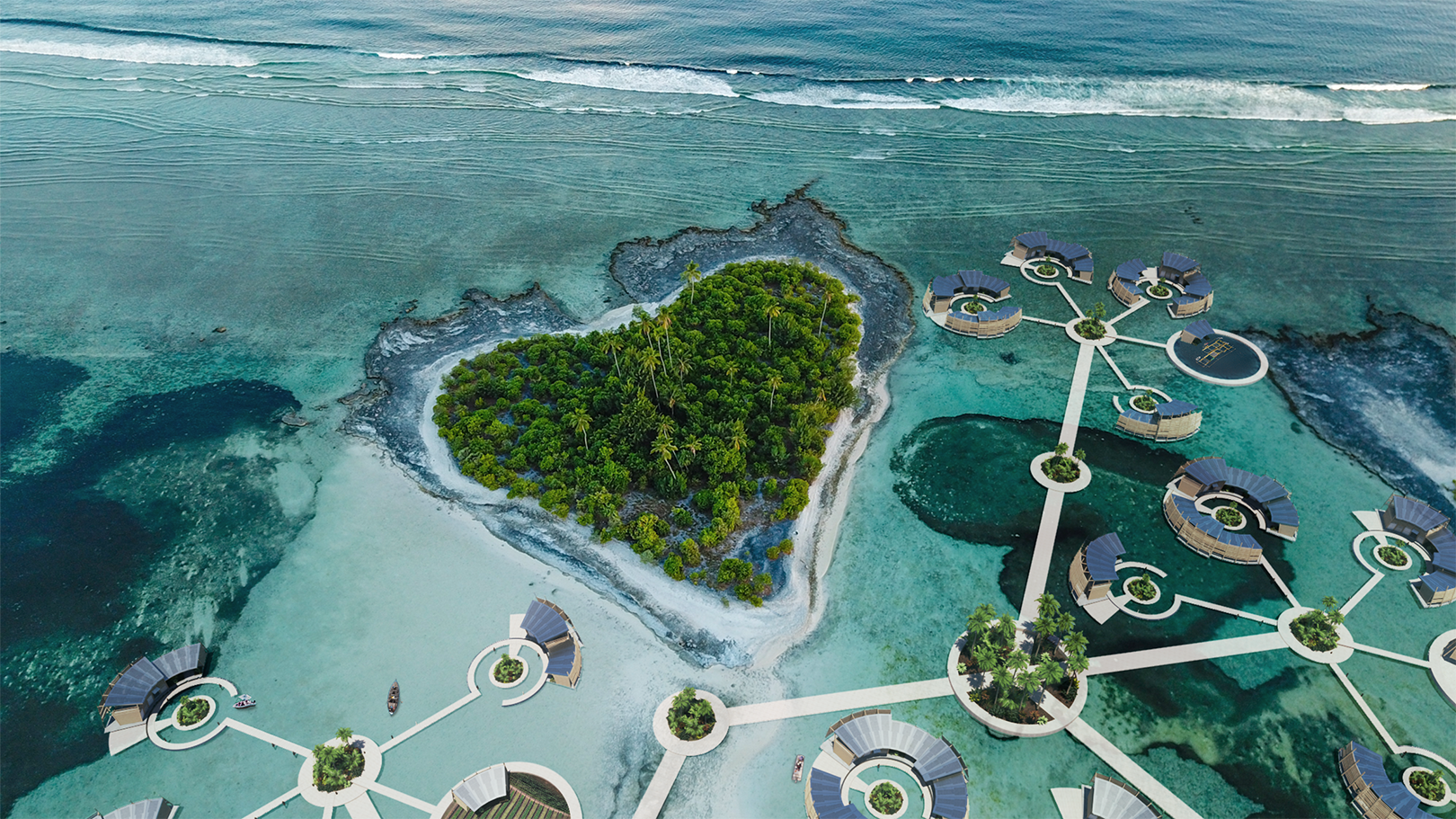
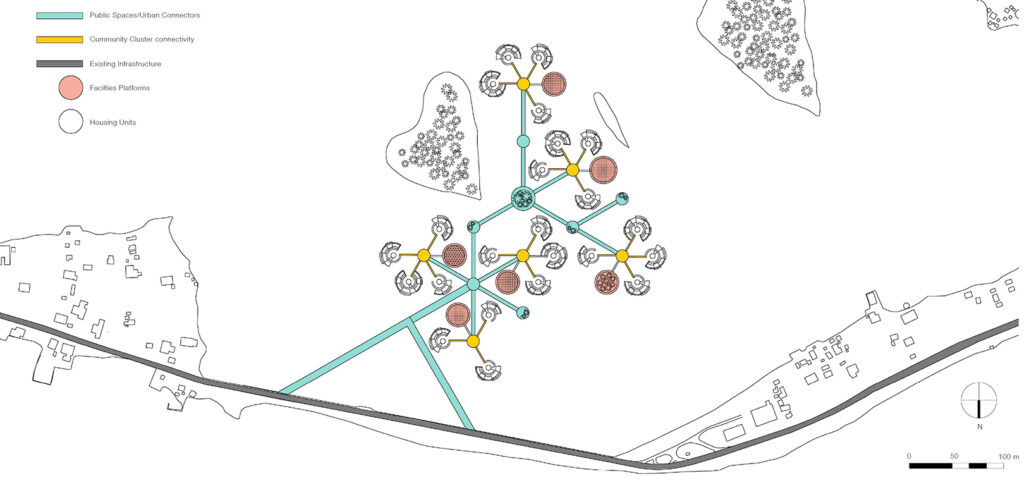
The design embraces flexibility – at both village and house scale – enabling step-by-step, organic growth. Open and unfinished elements invite gradual evolution as populations expand, needs shift, and climates change.The village structure mirrors a tree: a central axis as the trunk, modular housing clusters as branches, reaching outward and adapting over time.
It is a living framework. Resilient, modular, and ready to grow with the world it inhabits.
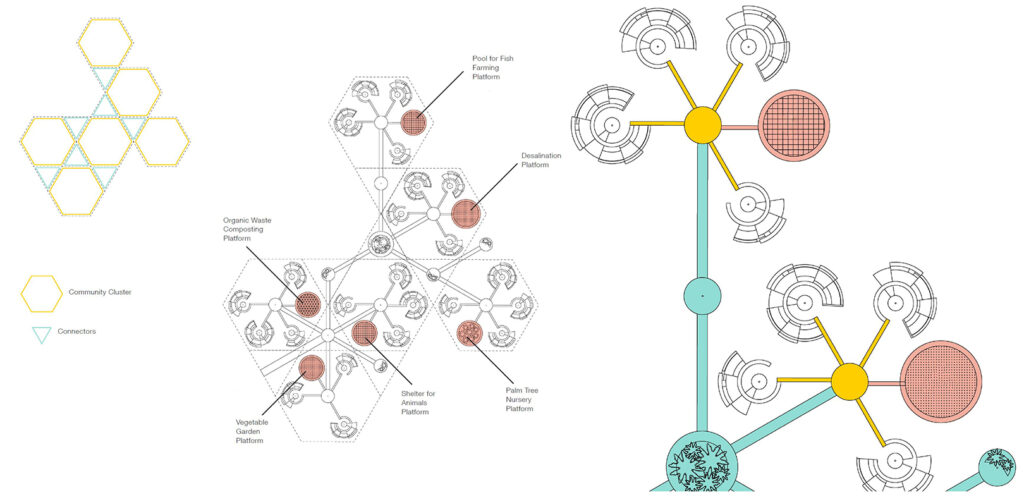
The Functional Core of the Floating Housing Module
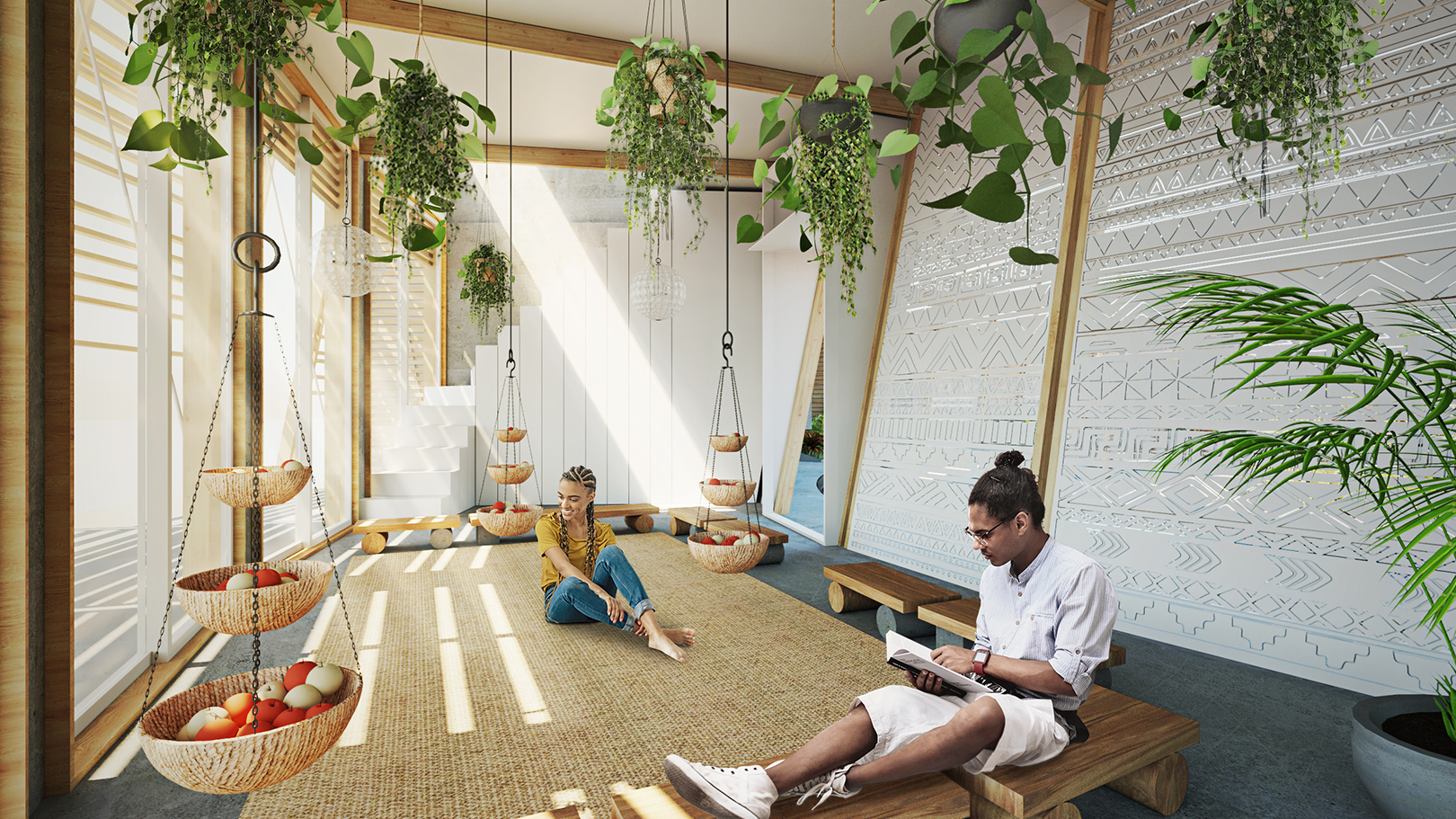
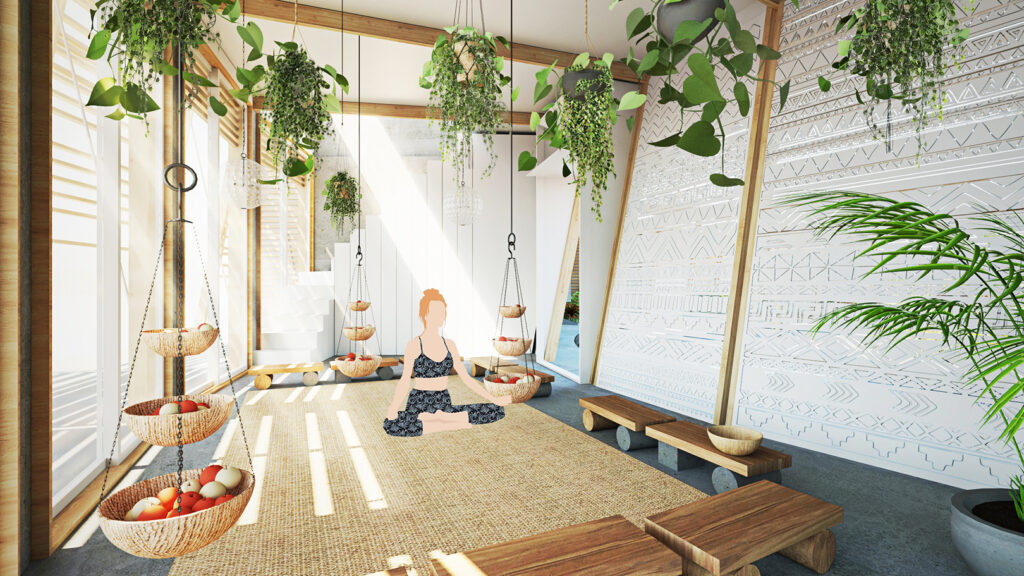
At the heart of each housing block lies the answer to the project’s programmatic needs. Beyond living space, every unit contains an open-air core – a place for growing vegetables, raising animals, or farming fish. These functions are embedded within connected modules, ensuring protection from seawater while keeping production close to daily life. Vegetables, fish, and animals remain vital to the community, and their integration is addressed both at the village scale and within each home.
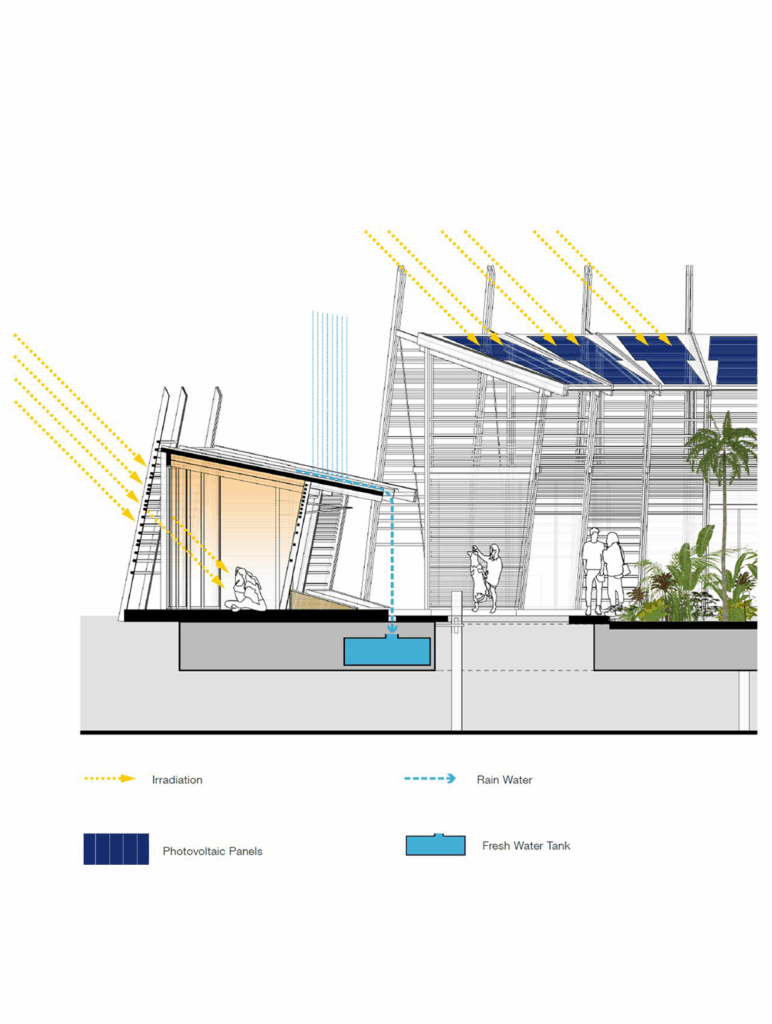
Self-Sufficiency: Energy and Water
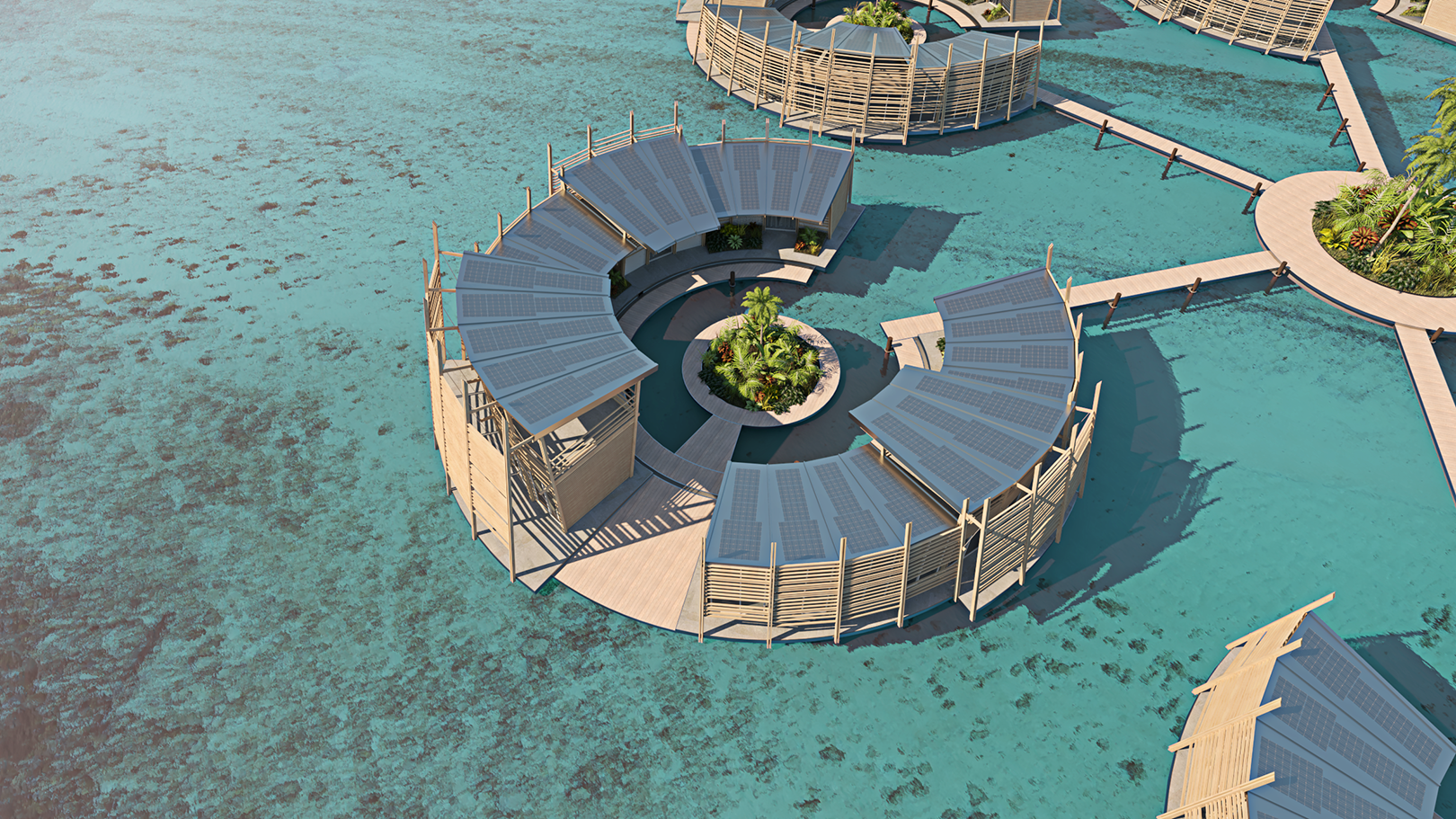
Photovoltaic panels provide the main source of electricity, ensuring each housing unit’s energy independence. The slightly tilted roof also gathers rainwater through surface grills, channeling it into freshwater tanks beneath the house. Rooftop and tank are linked by enclosed pipes for maximum collection and minimal loss. Each module operates autonomously yet remains part of a larger, interconnected system – resilient in both energy and water supply.
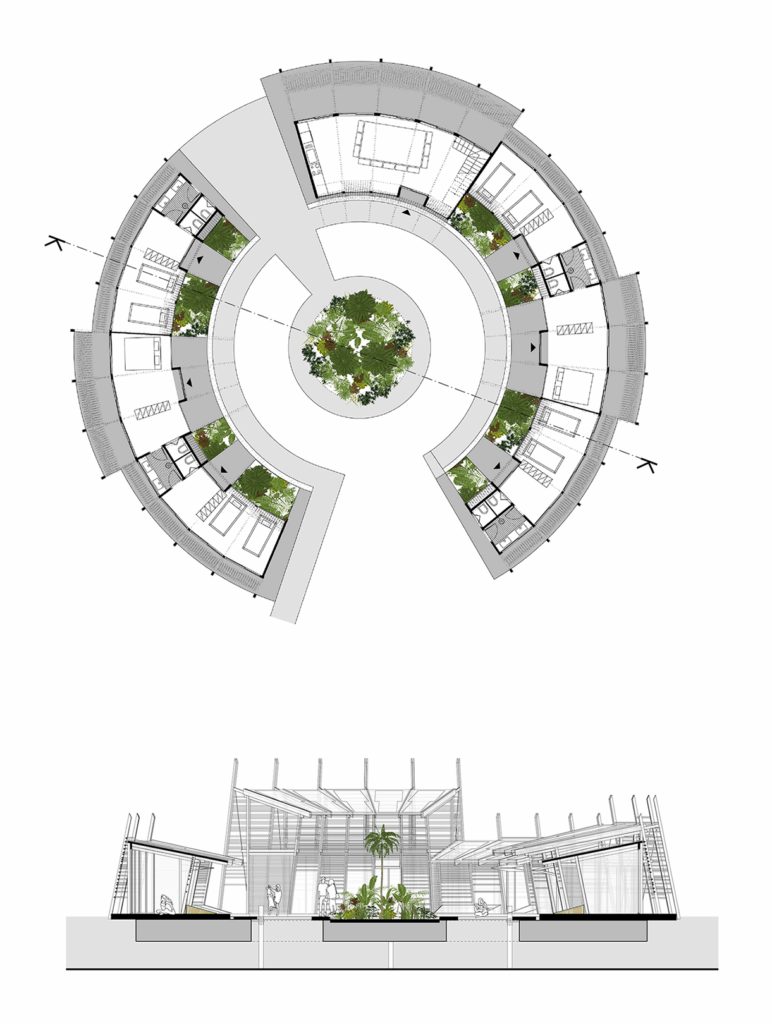
The In-between Space
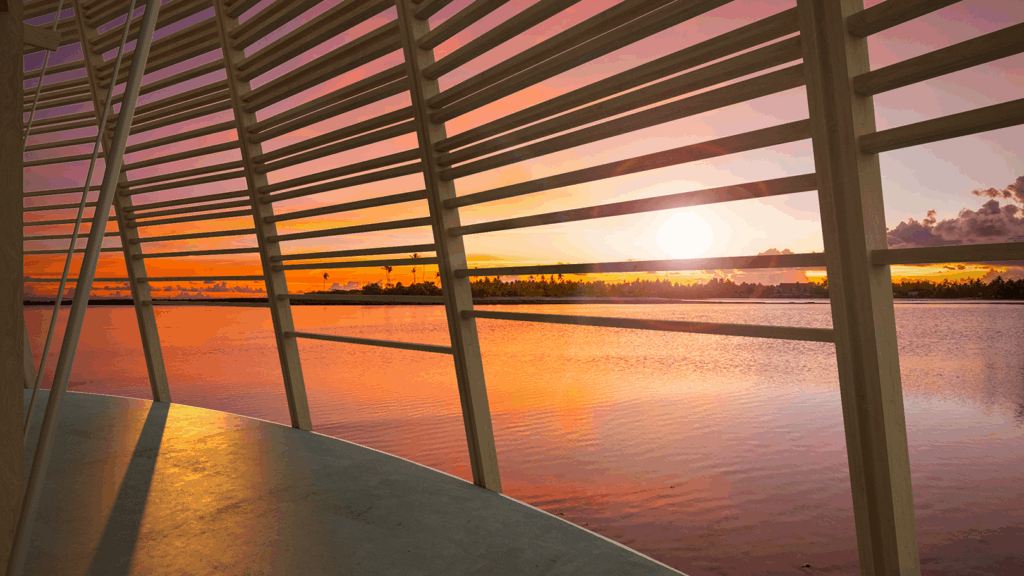
The wooden lamella structure of the Kiribati Floating Houses serves two purposes.
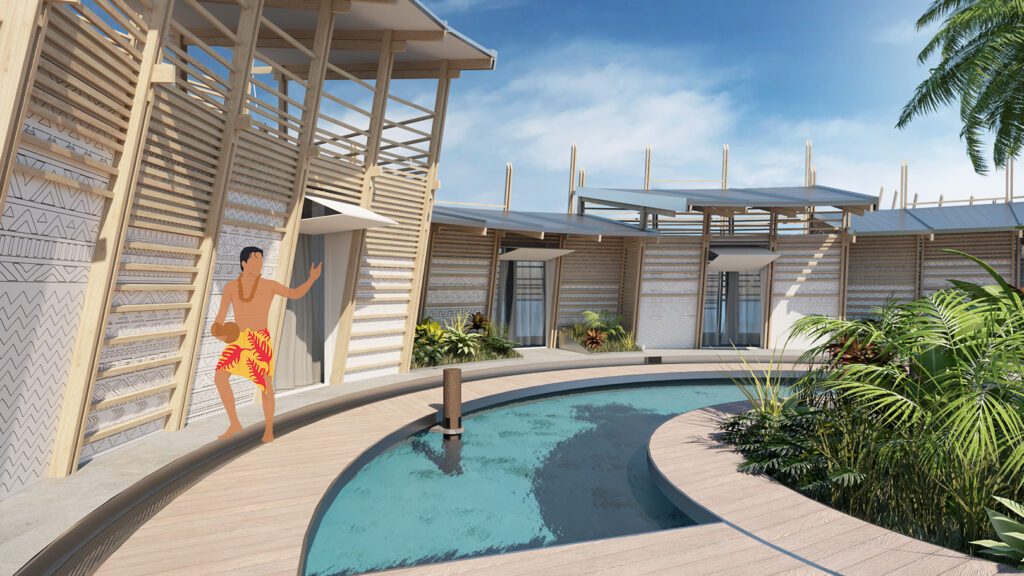
First, it builds gently on what already exists – respecting Tarawa’s architectural language through natural, tactile materials like wood and bass. The design introduces innovation in energy, adaptability, and future growth while remaining rooted in local context.
Second, it creates a fluid dialogue between inside and outside. The structure invites air, light, and ocean views to blur the boundaries between shelter and surroundings, allowing the house to breathe with its environment and belong wholly to its place.
People behind the project
Architecture: Eri Pontikopoulou, Gianluca Santosuosso
Research and Sustainability: Matthias Kimmel
Hi, this is a comment.
To get started with moderating, editing, and deleting comments, please visit the Comments screen in the dashboard.
Commenter avatars come from Gravatar.